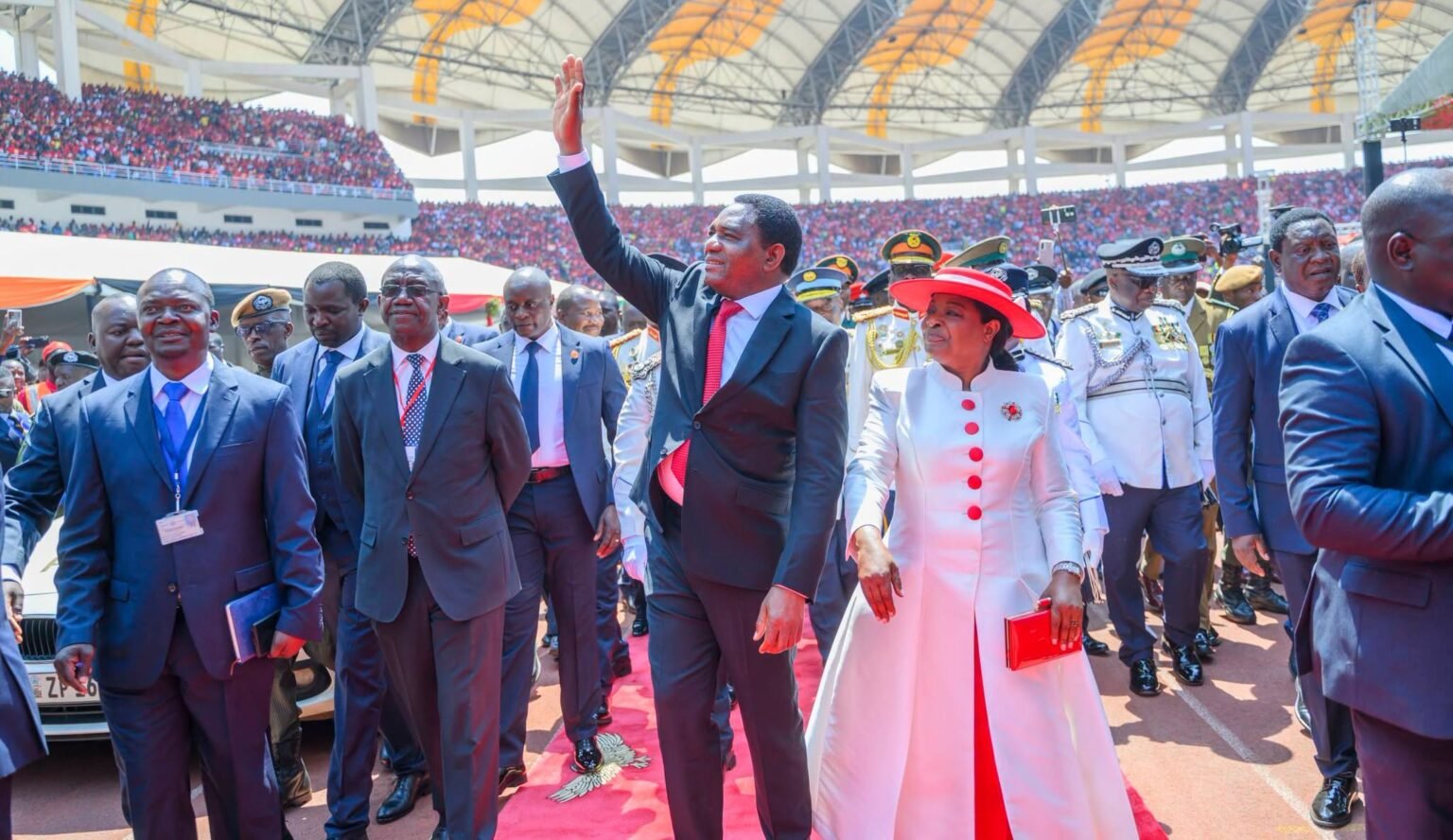
President Hakainde Hichilema used his second-term inauguration at National Heroes Stadium to launch a transformative economic blueprint he has named the Grow Zambia Agenda, telling thousands of supporters that the country’s focus now shifts from stabilisation to expansion.
Delivering his inaugural address shortly after being sworn in by Chief Justice Mumba Malila, the Head of State said the plan is coded 10-10-5-3-3-1-1-1, targeting 10 million tonnes of maize, 10,000 megawatts of electricity, five million tourists, three million tonnes of copper, three million tonnes of soya, one million tonnes of wheat, one million tonnes of sugar and a billion US dollars in beef export earnings.
Mr Hichilema said the target for the next five years is to more than double the size of the economy, creating jobs, business opportunities and treasury revenue for further investment in social services that reach ordinary households rather than remaining locked in national statistics.
“Economic growth must mean something at the dinner table. It must mean education for our children, a job for a young graduate, a market for a farmer, capital for an entrepreneur, opportunity for a woman in business and a better future for every child,” he said, drawing sustained applause from the red-clad crowd that filled the 60,000-capacity stadium.
The President said his first term had been spent restructuring external debt, stabilising the Kwacha and rebuilding investor confidence, achievements he described as the foundation for the growth phase now beginning. He pointed to the successful conclusion of Zambia’s debt restructuring programme, improved international reserves and reduced inflation as evidence that the groundwork had been properly laid.
He acknowledged that stability had not yet translated into relief for every household, particularly amid continued pressure on the cost of living, telling the crowd directly that government had heard the concerns of families still struggling to make ends meet despite the improved macroeconomic picture. “We know that for many families, the cost of living has remained challenging, and that the benefits of our stabilisation have not yet been felt at every level. We hear you,” he said.
Mr Hichilema also announced that resources and responsibility would continue to be pushed down to local authorities through accelerated decentralisation, alongside deeper investment in education, skills development and healthcare, describing education as the greatest equaliser and the best inheritance the country could give its children.
Government would intensify the fight against corruption and protect public resources, he said, urging every public servant to place the national interest above personal gain and pledging that when all put national interests first, personal interests would in turn be taken care of.
The President said no province would be excluded and no district forgotten in the drive to expand the economy, and that development would continue to reach every corner of the republic regardless of political affiliation.
He linked the new agenda to a change of mindset he said the nation needed to embrace, moving away from what he termed the tantameni or handouts culture and toward growth, expansion, opportunity and prosperity built through production rather than dependency.
Economic analysts in Lusaka said the scale of the targets, particularly the tripling of copper output and the doubling of electricity generation capacity, would require sustained investment in infrastructure, power generation and irrigation over the coming five years, alongside continued reform of institutions that have historically slowed project delivery. Business groups welcomed the announcement but cautioned that translating the targets into results would depend heavily on how quickly government could unlock financing for the mining, energy and agricultural sectors central to the plan.